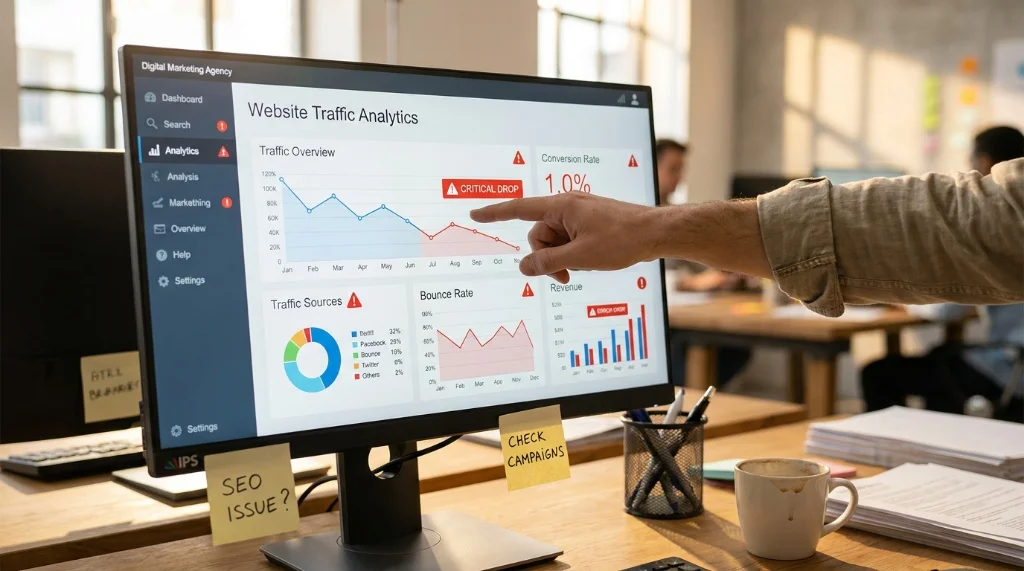
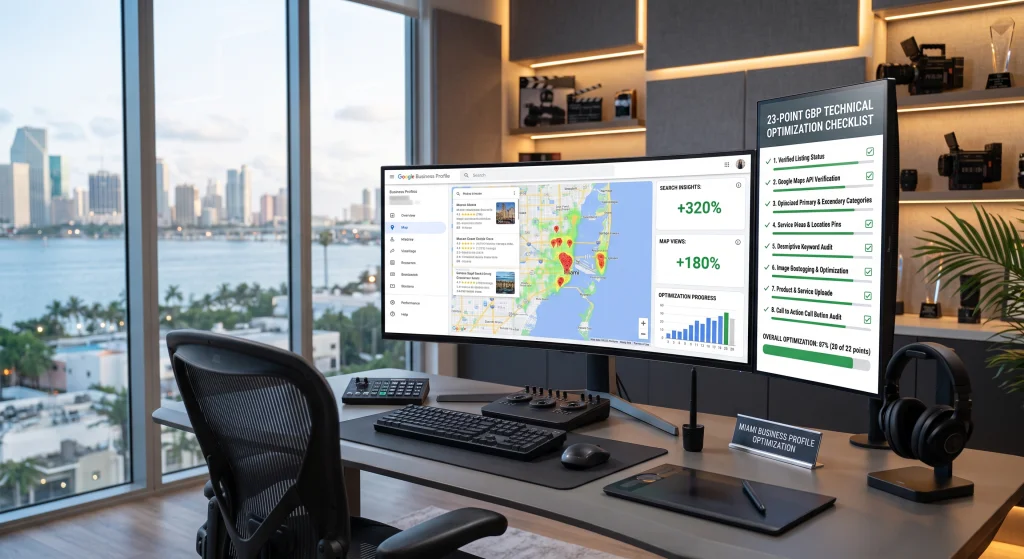
The era of the “static brochure” website is dead. In South Florida’s booming, tech-forward market, your website can no longer afford to be a passive online business card. It needs to adapt in real-time to the exact person clicking your link.
Think about the last time you handed out a physical business card. Now imagine if that card could magically rewrite its own text depending on whether you handed it to a potential investor, a high-ticket B2B buyer, or a prospective patient.
That is precisely what is happening right now in the world of advanced web development.
For the last twenty years, websites have operated as static, rigid digital storefronts. Whether a Fortune 500 CEO or a college intern landed on your homepage, they saw the exact same headline, the exact same video, and the exact same call to action. In a market as fiercely competitive as Miami, treating every visitor identically is a massive waste of marketing capital and advertising spend.
At Cr3ative Growth, we are pushing the boundaries of what a digital infrastructure can do for B2B, enterprise, and healthcare brands. We are moving away from linear code and building AI-powered smart sites—dynamic ecosystems designed to personalize the user experience at scale.
Here is how AI website design is permanently disrupting the conversion game.
1. The Death of the “One-Size-Fits-All” Homepage
The primary objective of a modern B2B or medical website is simple: reduce the friction between a prospect’s urgent problem and your specific solution.
Traditional web design forces the user to do the heavy lifting. They have to navigate through convoluted dropdown menus, heavy site maps, and generic “About Us” pages just to find the information relevant to their industry. AI-driven websites completely flip this dynamic on its head.
How Real-Time Dynamic Personalization Works
By utilizing AI behavioral tools, machine learning scripts, and advanced data-enrichment APIs, smart sites analyze the incoming visitor data before the page even finishes loading. The system evaluates:
-
Referral Source & Intent: Did they come from a Google Search for an organic keyword, a high-intent LinkedIn article, or a highly specific Meta Ad campaign?
-
Firmographic Data: For B2B brands, AI tools can instantly detect the visitor’s IP address to identify their company size, industry sector, and corporate revenue.
-
Geographic Context: Tailoring visual cues and copy specifically to their neighborhood, city, or regional regulations.
The Hybrid Workflow in Action: If a user clicks through from a Meta Ad targeting Healthcare Logistics, the AI instantly swaps the homepage headline, hero background imagery, and case study section to focus entirely on medical supply chain solutions. If the next visitor is a Tech Retailer, the site dynamically shifts to display e-commerce infrastructure statistics. The website automatically adapts to the intent of the user, resulting in skyrocketing engagement and drastically lower bounce rates.
2. Hyper-Personalized Conversion Architecture
A visually stunning website that fails to convert traffic into revenue is nothing more than an expensive piece of digital art.
In complex industries like healthcare, pharmaceuticals, and enterprise B2B, conversion isn’t driven by flashy graphics; it is driven by trust and immediate relevance. AI website design allows us to build an intelligent, predictive conversion architecture that moves prospects seamlessly through the acquisition funnel.
Strategic Elements of an Intelligent Conversion Funnel
-
Contextual Knowledge-Base Chatbots: Standard, rule-based chatbots frustrate users with rigid, pre-programmed loops. AI smart sites deploy custom LLM chat agents trained exclusively on your brand’s deep internal data, case studies, and compliance guidelines. They can answer intricate technical objections, verify medical insurance parameters, or qualify an enterprise lead instantly on the spot.
-
Dynamic Calls to Action (CTAs): A first-time visitor from cold traffic shouldn’t be pushed with the same aggressive CTA as a warm lead returning for the third time. AI tracks user cookies and historical touchpoints. A new visitor might see a soft CTA offering an industry whitepaper, while a returning lead is automatically presented with a streamlined calendar interface to “Book a Discovery Call with our Miami Team.”
-
Predictive Lead Scoring: As a user interacts with different elements of your web design, the background AI scores their behavioral velocity. High-intent actions trigger immediate pathways—such as displaying live social proof, client testimonials, or initiating a direct pipeline to your sales team’s CRM.
3. Rapid Iteration, AI Heatmapping, and Automated Technical SEO
Traditional conversion rate optimization (CRO) and A/B testing are notoriously slow processes. Marketers create a Version A and a Version B of a landing page, spend thousands of dollars to drive traffic for a month, and cross their fingers while analyzing the data.
In 2026, that framework is far too slow to keep up with shifting ad algorithms and consumer behaviors.
[User Interaction] ➔ [AI Neural Heatmapping] ➔ [Instant Bottleneck Identification] ➔ [Rapid Copy/Design Optimization]
Eliminating Technical Deficiencies with Machine Learning
Modern AI-powered design stacks shift web maintenance from reactive patches to automated, proactive optimization:
-
AI Neural Heatmapping: Software instantly analyzes user scroll depth, cursor velocity, and micro-interactions to pinpoint exactly where prospects lose interest, get confused by a layout, or experience mobile friction.
-
Instant Bottleneck Identification: Instead of waiting for a quarterly review, the AI flagging engine detects a drop-off on a key checkout or landing page within hours.
-
Algorithmic Code Optimization: AI tools constantly monitor technical performance, automatically compressing heavy image assets, cleaning up unused CSS scripts, and ensuring your site achieves perfect Core Web Vitals scores for Google’s search crawlers. This ensures your site ranks faster and loads flawlessly on every device.
The Miami Advantage: Scale Your Digital Infrastructure
Miami has solidified its position as a fast-paced, high-momentum global tech and business hub. As national enterprises, elite medical practices, and international B2B firms continue to establish massive footprints across South Florida, the digital benchmark has fundamentally shifted.
If your company’s website looks, feels, and operates like a static brochure built years ago, you are silently leaking high-ticket conversions to competitors who have invested in intelligent, adaptive web experiences.
AI-powered web design isn’t a speculative, futuristic luxury; it is the definitive new baseline for scaling a business. Your website shouldn’t just sit there waiting to be read. It should actively work for you, engage intelligently with your users, and scale your business growth automatically.
Ready to Build a Website That Converts?
Stop wasting valuable ad spend driving traffic to a static page that treats every customer like a stranger. At Cr3ative Growth, we engineer the modern creative and technical infrastructure your business needs to dominate the market—from high-retention video production and Paid Media management to dynamic, AI-first web design.
Don’t just exist online. Own your space.